Guide No. 11 · The K-12 Series
Preparing for a Lesson Observation
A calm, systematic run-up to the observed lesson — without the midnight replan.
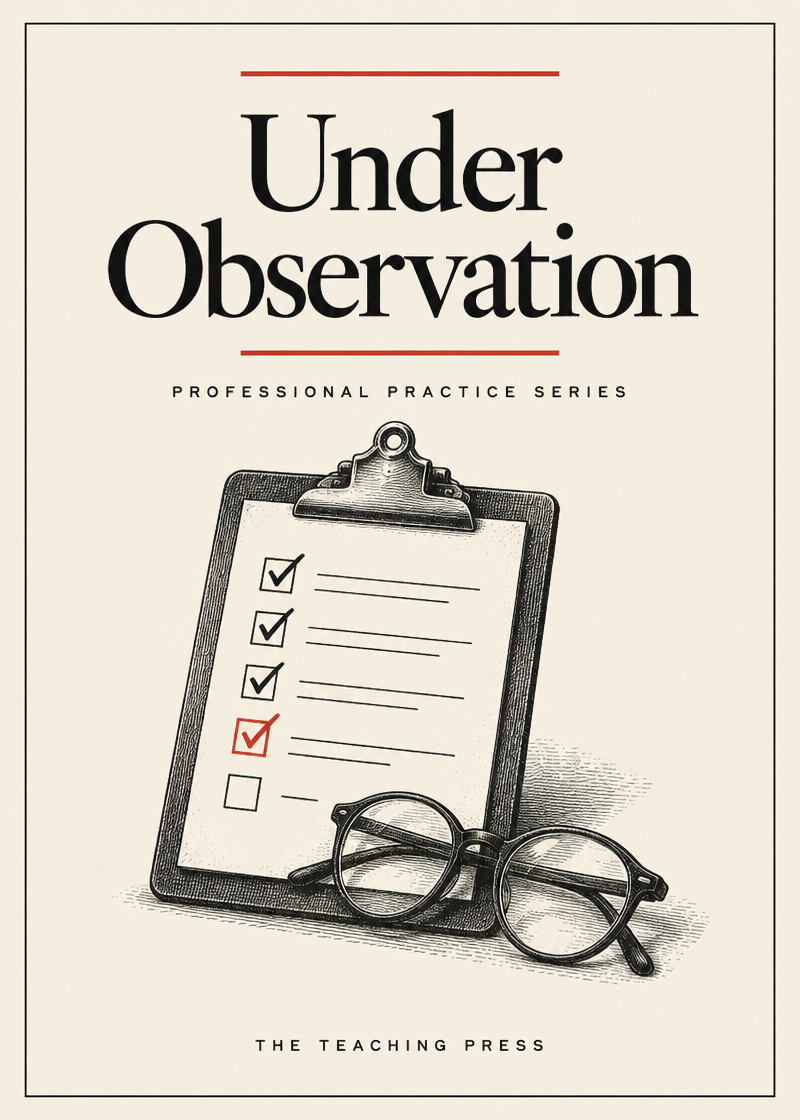
Most teachers prepare for observations the wrong way: a performance lesson, planned to exhaustion, taught to strangers. Observers are not fooled — they have watched hundreds of lessons and can smell a one-off from the doorway.
This guide prepares you differently. Plan a strong ordinary lesson, visible routines, clear evidence of progress — and walk in knowing exactly what the observer will write before they write it.
What's inside
- 01
What Observers Actually Look For
Progress, routines, and questioning — the real rubric behind the rubric.
- 02
Planning the Observed Lesson
Strong, ordinary, and rehearsed once — never a performance piece.
- 03
The Evidence File
Data, seating plan, and context notes that answer questions before they're asked.
- 04
The Pre-Observation Conversation
Setting the agenda so the observation measures your best teaching, not your luck.
- 05
On the Day
Timing, presence, and recovering from the wobble in real time.
- 06
The Feedback Meeting
How to respond, what to challenge, and turning judgement into development.
Read an excerpt
Chapter 1 — What Observers Actually Look For
Within ten minutes, a practised observer has answered one question: do the routines in this room belong to the teacher or to the observation? Students reveal it instantly — in how they enter, where they put their hands, and whether they are surprised by anything.
This is excellent news. It means the observation is won in the six weeks before it, in the ordinary routines you have already built. The observed lesson merely displays them. Plan the display, don't fake the building.
More in the series
No. 01
The Lesson Planning Field Guide
$12
No. 02
The Calm Classroom Handbook
$14
No. 03
The Worksheet Design Manual
$9
No. 04
The Strategy Playbook
$12
No. 05
Lesson Planning: English, Grades 1–5
$8
No. 06
Lesson Planning: Maths, Grades 1–5
$8
No. 07
Lesson Planning: Science, Grades 1–5
$7
No. 08
Lesson Planning: English, Grades 6–12
$9
No. 09
Lesson Planning: Maths, Grades 6–12
$10
No. 10
Lesson Planning: Science, Grades 6–12
$9
No. 12
Answering Inspection Questions
$15
No. 13
Prepping Lessons After School Vacations
$5
No. 14
Handling Teacher Burnout: UAE Edition
$10
No. 15
How to Handle Subject Coordinators
$6
No. 16
How to Thrive in a Subject Department
$6
No. 17
Managing School Expectations
$7