Guide No. 16 · The K-12 Series
How to Thrive in a Subject Department
The politics, the people, and the shared resources — build a career inside your department, not around it.
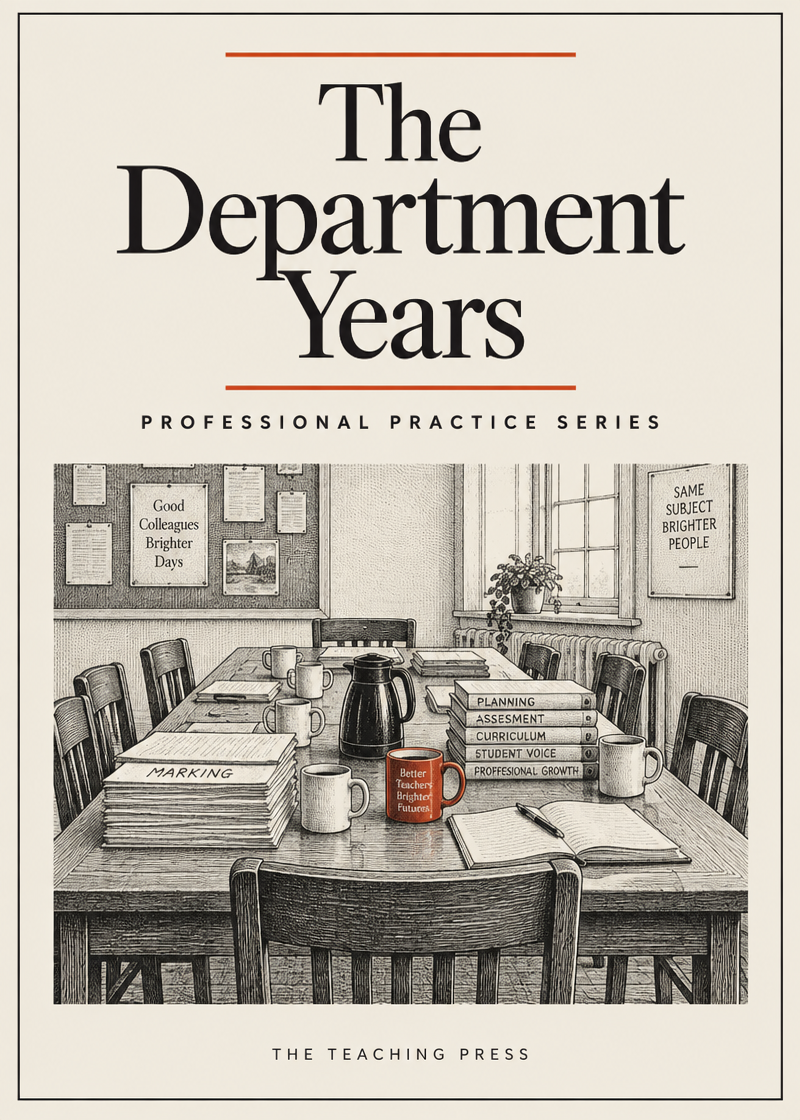
Departments are small villages: shared cupboards, shared grievances, and memories that outlast headteachers. Thriving in one is a learnable skill — and it has more effect on your career than any single lesson you will ever teach.
This guide covers the unwritten curriculum of department life: how resources actually flow, how reputations actually form, and how to be valued without being volunteered for everything.
What's inside
- 01
Reading the Department
The first term: mapping roles, histories, and the informal power structure.
- 02
The Shared Drive Etiquette
Giving before taking, naming files properly, and the credit rule.
- 03
Meetings That Waste Less of Your Life
Contributing usefully, and the sentence that ends circular discussions.
- 04
The Difficult Colleague
Territory, grudges, and working beside someone you'd never choose.
- 05
Visible Without Being Voluntary-for-Everything
Choosing contributions that build reputation, not just workload.
- 06
Building a Reputation That Travels
Why your next job comes from this department — and how to earn it.
Read an excerpt
Chapter 2 — The Shared Drive Etiquette
Every department has an economy, and its currency is the shared resource folder. The teachers who withdraw constantly and deposit never are known — and remembered at reference time. The rule is simple: deposit before you withdraw, and name your files so a stranger could use them.
Credit is the second law. When a colleague's worksheet saves your Tuesday, say so in the meeting by name. It costs you nothing, buys real goodwill, and marks you as the kind of colleague departments fight to keep.
More in the series
No. 01
The Lesson Planning Field Guide
$12
No. 02
The Calm Classroom Handbook
$14
No. 03
The Worksheet Design Manual
$9
No. 04
The Strategy Playbook
$12
No. 05
Lesson Planning: English, Grades 1–5
$8
No. 06
Lesson Planning: Maths, Grades 1–5
$8
No. 07
Lesson Planning: Science, Grades 1–5
$7
No. 08
Lesson Planning: English, Grades 6–12
$9
No. 09
Lesson Planning: Maths, Grades 6–12
$10
No. 10
Lesson Planning: Science, Grades 6–12
$9
No. 11
Preparing for a Lesson Observation
$12
No. 12
Answering Inspection Questions
$15
No. 13
Prepping Lessons After School Vacations
$5
No. 14
Handling Teacher Burnout: UAE Edition
$10
No. 15
How to Handle Subject Coordinators
$6
No. 17
Managing School Expectations
$7