Guide No. 12 · The K-12 Series
Answering Inspection Questions
Subject-wise preparation for school inspections — answers that are honest, specific, and evidenced.
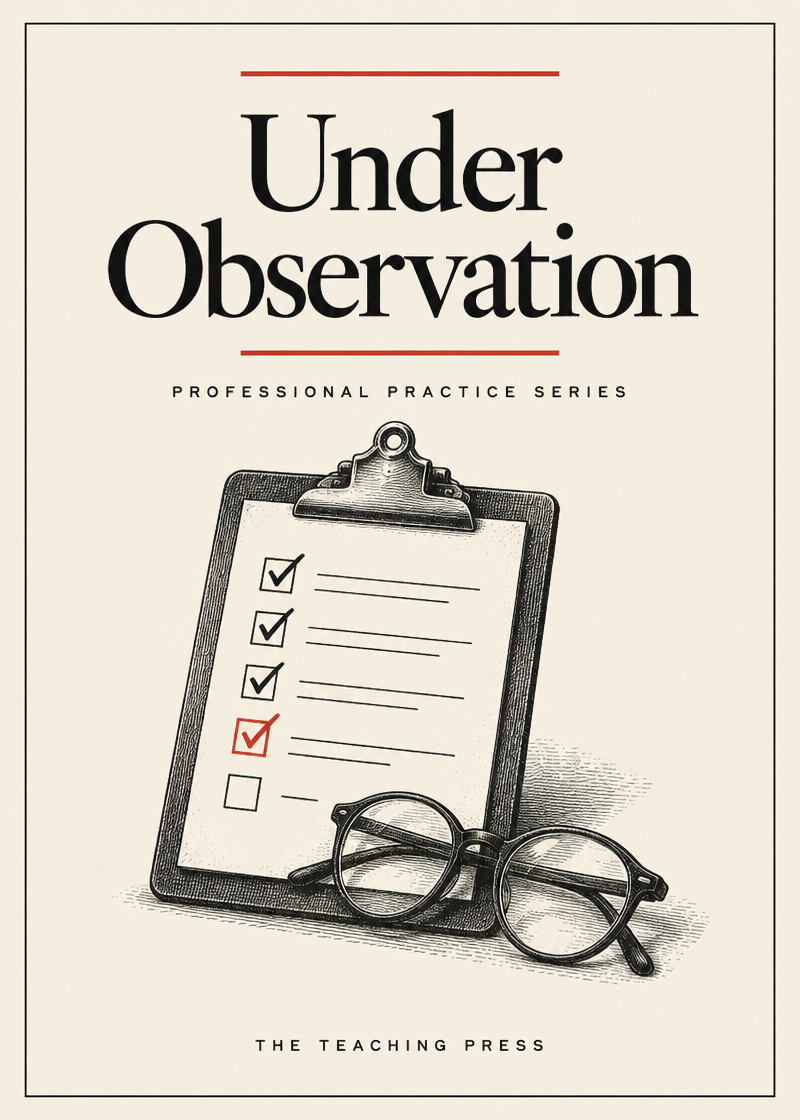
Inspections generate fear out of all proportion to their actual format: a small set of predictable questions, asked of ordinary teachers, in ordinary working weeks. The teachers who fare best are not the most polished — they are the most specific.
This guide collects the real questions, organised by subject and by role, with model answers that show the difference between 'we differentiate' and an answer an inspector can verify.
What's inside
- 01
How Inspections Actually Work
The logic of deep dives, book looks, and the questions behind the questions.
- 02
The Universal Questions
Curriculum intent, progress, and support — asked of every teacher, every subject.
- 03
English-Specific Questions
Reading culture, writing progression, and how you teach grammar in context.
- 04
Maths-Specific Questions
Fluency, reasoning, and how your practice questions build thinking.
- 05
Science-Specific Questions
Practical coverage, safety, and how theory connects to the bench.
- 06
Books, Data & Evidence
Preparing what inspectors actually open — and what they're checking for.
Read an excerpt
Chapter 2 — The Universal Questions
'How do you know your students are making progress?' has one correct shape of answer: a specific method, a recent example, and a piece of evidence. 'I mark their books' is none of the three. 'I use a four-question retrieval starter every lesson; last Tuesday half the class missed the question on fractions, so Thursday's starter revisited it — here are the books' is all of them.
Inspectors are trained to follow the thread from your answer into your classroom and your students' books. Specific answers survive the following. Adjectives do not.
More in the series
No. 01
The Lesson Planning Field Guide
$12
No. 02
The Calm Classroom Handbook
$14
No. 03
The Worksheet Design Manual
$9
No. 04
The Strategy Playbook
$12
No. 05
Lesson Planning: English, Grades 1–5
$8
No. 06
Lesson Planning: Maths, Grades 1–5
$8
No. 07
Lesson Planning: Science, Grades 1–5
$7
No. 08
Lesson Planning: English, Grades 6–12
$9
No. 09
Lesson Planning: Maths, Grades 6–12
$10
No. 10
Lesson Planning: Science, Grades 6–12
$9
No. 11
Preparing for a Lesson Observation
$12
No. 13
Prepping Lessons After School Vacations
$5
No. 14
Handling Teacher Burnout: UAE Edition
$10
No. 15
How to Handle Subject Coordinators
$6
No. 16
How to Thrive in a Subject Department
$6
No. 17
Managing School Expectations
$7