Guide No. 07 · The K-12 Series
Lesson Planning: Science, Grades 1–5
Hands-on, minds-on — plan investigations that are safe, simple, and genuinely scientific.
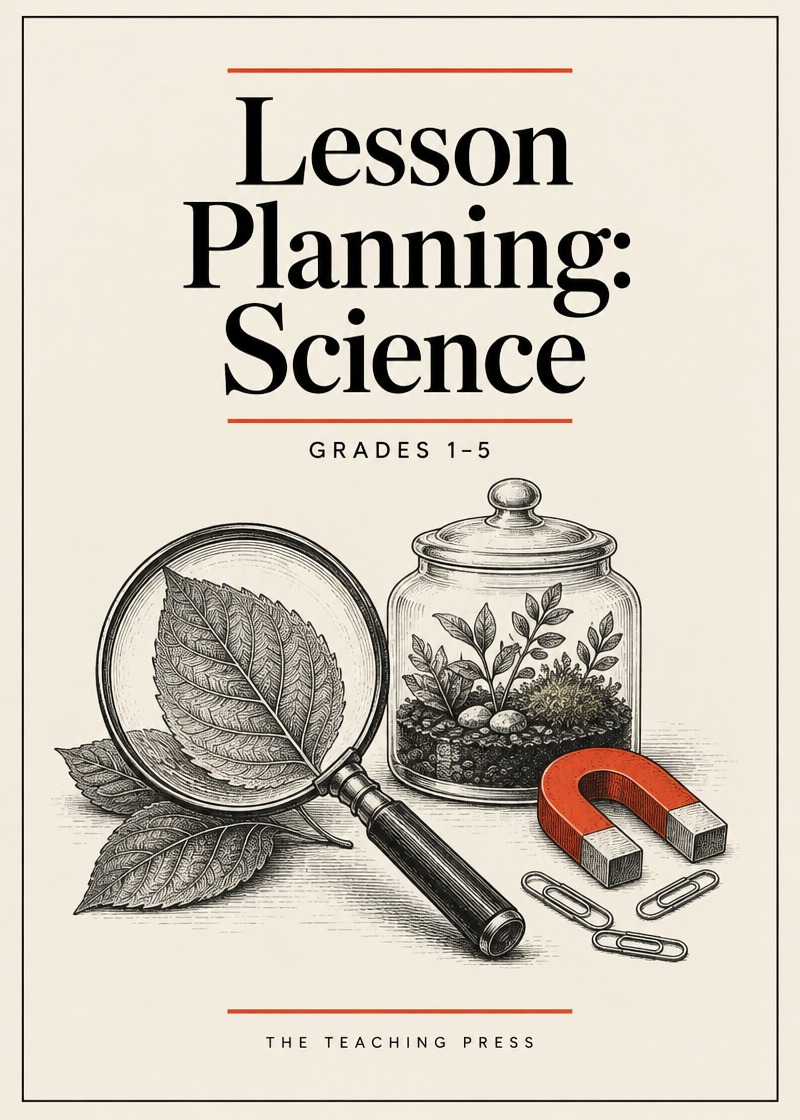
Primary science swings between two failures: the demonstration the children only watch, and the activity afternoon where hands are busy and minds are elsewhere. This guide plans the third way — investigations children run themselves, wrapped around one clear concept.
Every chapter assumes a normal classroom, a normal budget, and no lab assistant. If an investigation needs specialist equipment, we plan an alternative.
What's inside
- 01
Concept First, Activity Second
The planning order that stops fun activities from teaching nothing.
- 02
Planning Real Investigations
Variables, fair tests, and predictions — structured for six-to-eleven-year-olds.
- 03
The Equipment-Light Practical
Twelve core investigations using classroom materials, planned step by step.
- 04
Science Talk & Vocabulary
Sentence stems and word routines that build scientific language.
- 05
Recording Results Without Tears
Tables, drawings, and graphs matched to each grade band.
- 06
Safety, Groups & the Reset
Risk-light planning, group roles, and tidying up in four minutes.
Read an excerpt
Chapter 1 — Concept First, Activity Second
Write the concept sentence first: 'By the end of this lesson, the children will understand that…' If the sentence is hard to write, the lesson is not ready to plan. The activity — however delightful — is chosen last, because it is merely the vehicle.
The test is brutal but quick: if the children did the activity perfectly and could not state the concept afterwards, the activity failed. Plan the concept, plan the question that checks it, and only then plan the fun.
More in the series
No. 01
The Lesson Planning Field Guide
$12
No. 02
The Calm Classroom Handbook
$14
No. 03
The Worksheet Design Manual
$9
No. 04
The Strategy Playbook
$12
No. 05
Lesson Planning: English, Grades 1–5
$8
No. 06
Lesson Planning: Maths, Grades 1–5
$8
No. 08
Lesson Planning: English, Grades 6–12
$9
No. 09
Lesson Planning: Maths, Grades 6–12
$10
No. 10
Lesson Planning: Science, Grades 6–12
$9
No. 11
Preparing for a Lesson Observation
$12
No. 12
Answering Inspection Questions
$15
No. 13
Prepping Lessons After School Vacations
$5
No. 14
Handling Teacher Burnout: UAE Edition
$10
No. 15
How to Handle Subject Coordinators
$6
No. 16
How to Thrive in a Subject Department
$6
No. 17
Managing School Expectations
$7