Guide No. 08 · The K-12 Series
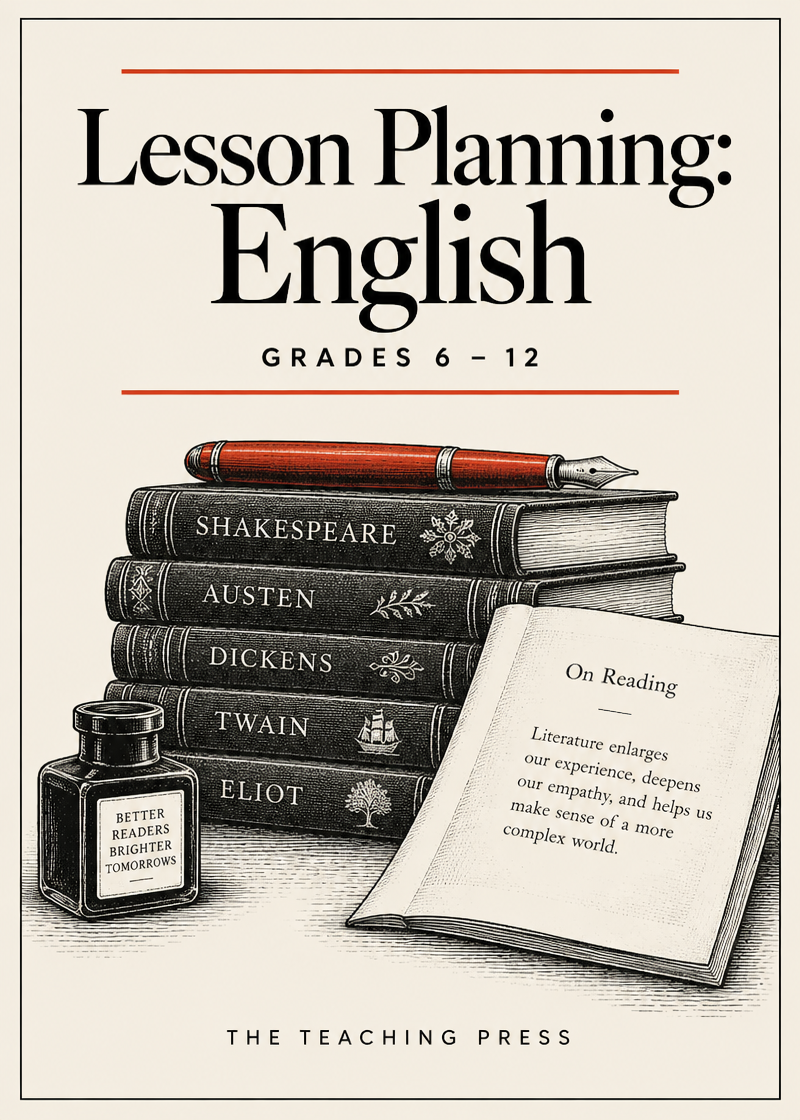
Lesson Planning: English, Grades 6–12
From analysis to argument — plan literature and writing lessons with real intellectual weight.
Secondary English lessons die two deaths: the teacher talks about the text for forty minutes, or the class 'discusses' it with nothing to hold on to. This guide plans the middle path — students doing the thinking about literature, with the teacher as architect rather than performer.
Covers Grades 6–12 with exam-board-aware variations, essay scaffolds, and the discussion structures that get the quiet majority talking.
What's inside
- 01
Text-First Lesson Design
Planning lessons where the text does the work — and the questions carry the thinking.
- 02
Annotation Routines That Stick
A three-pass annotation system students can run without you.
- 03
Planning the Essay Lesson
From thesis to paragraph: scaffolds that transfer to exam conditions.
- 04
Discussion Structures for Older Students
Harkness-style circles, accountable talk, and rescuing the silent majority.
- 05
Grammar in Context
Teaching sentence craft inside literature, not in a separate workbook.
- 06
Assessment Without the Marking Mountain
Live feedback, coded marking, and peer review that actually reviews.
Read an excerpt
Chapter 4 — Discussion Structures for Older Students
The phrase 'class discussion' usually means the teacher, three volunteers, and twenty-five witnesses. Structure is what changes the ratio: give every student a tracking role, a sentence stem, and ninety seconds of silent preparation before anyone speaks.
Plan the discussion like you plan the text work — with timings, roles, and a written output. A discussion that leaves nothing on paper evaporates by lunchtime; a discussion that ends in three written sentences becomes tomorrow's starter.
More in the series
No. 01
The Lesson Planning Field Guide
$12
No. 02
The Calm Classroom Handbook
$14
No. 03
The Worksheet Design Manual
$9
No. 04
The Strategy Playbook
$12
No. 05
Lesson Planning: English, Grades 1–5
$8
No. 06
Lesson Planning: Maths, Grades 1–5
$8
No. 07
Lesson Planning: Science, Grades 1–5
$7
No. 09
Lesson Planning: Maths, Grades 6–12
$10
No. 10
Lesson Planning: Science, Grades 6–12
$9
No. 11
Preparing for a Lesson Observation
$12
No. 12
Answering Inspection Questions
$15
No. 13
Prepping Lessons After School Vacations
$5
No. 14
Handling Teacher Burnout: UAE Edition
$10
No. 15
How to Handle Subject Coordinators
$6
No. 16
How to Thrive in a Subject Department
$6
No. 17
Managing School Expectations
$7